Green Loop Update: Working Bees, Compost Trials, and the Road to Richer Soil
April has been a full month at the Green Loop pilot site at Eudaimonia. Volunteers, build work, and the science side of the project have all been moving along together.
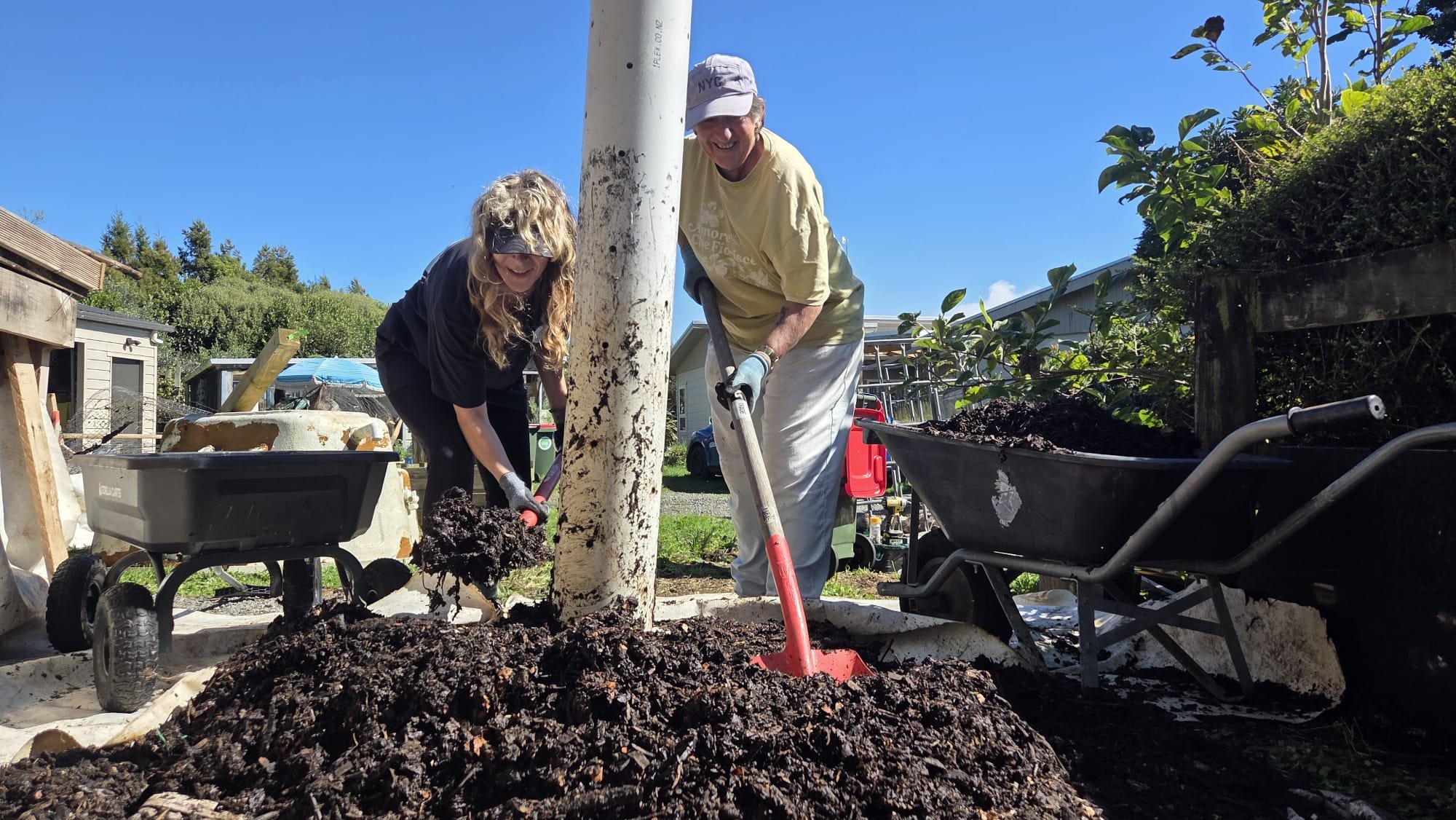
Maria, our volunteer coordinators (left), and Noelene, one of our Sustainable Taranaki volunteers superstar (right) during the working bee.
Getting the Site Ready
Earlier this month, a small but mighty crew came together: three community volunteers from the Sustainable Taranaki network, alongside five of us from the core team. Rain jackets on, boots in the mud, we got to work.
The working bee was focused on preparing the site for upcoming visits, making sure it's safe, accessible, and clearly set up as a working demonstration space.
That meant:
Clearing and reshaping key areas to create flow through the site
Building compost infrastructure from upcycled pallets, including a compost "train" and maturation bays
Beginning the transformation of an old jacuzzi into a worm-finishing system
Repositioning one of the main compost cylinders to open up the space
As we cleared space for the new pallet system, we were able to put it to use straight away. Together with the volunteers, we built a working Green Loop compost system on the day, using three-week fermented food waste from the bokashi mix and locally sourced woodchip. People could get their hands into it, not just look at it.
The first day brought classic Taranaki rain, so the team stuck to sheltered building work. The second day the sun came out, and you could start to see the site coming together as somewhere people could actually walk through and engage with.
“Thursday's working bee was super-enjoyable! The Green Loop Pilot Site is inspiring - so interesting to learn about the compost already "brewing" and see the site "in action".” Maria Grant, Volunteer Coordinator.
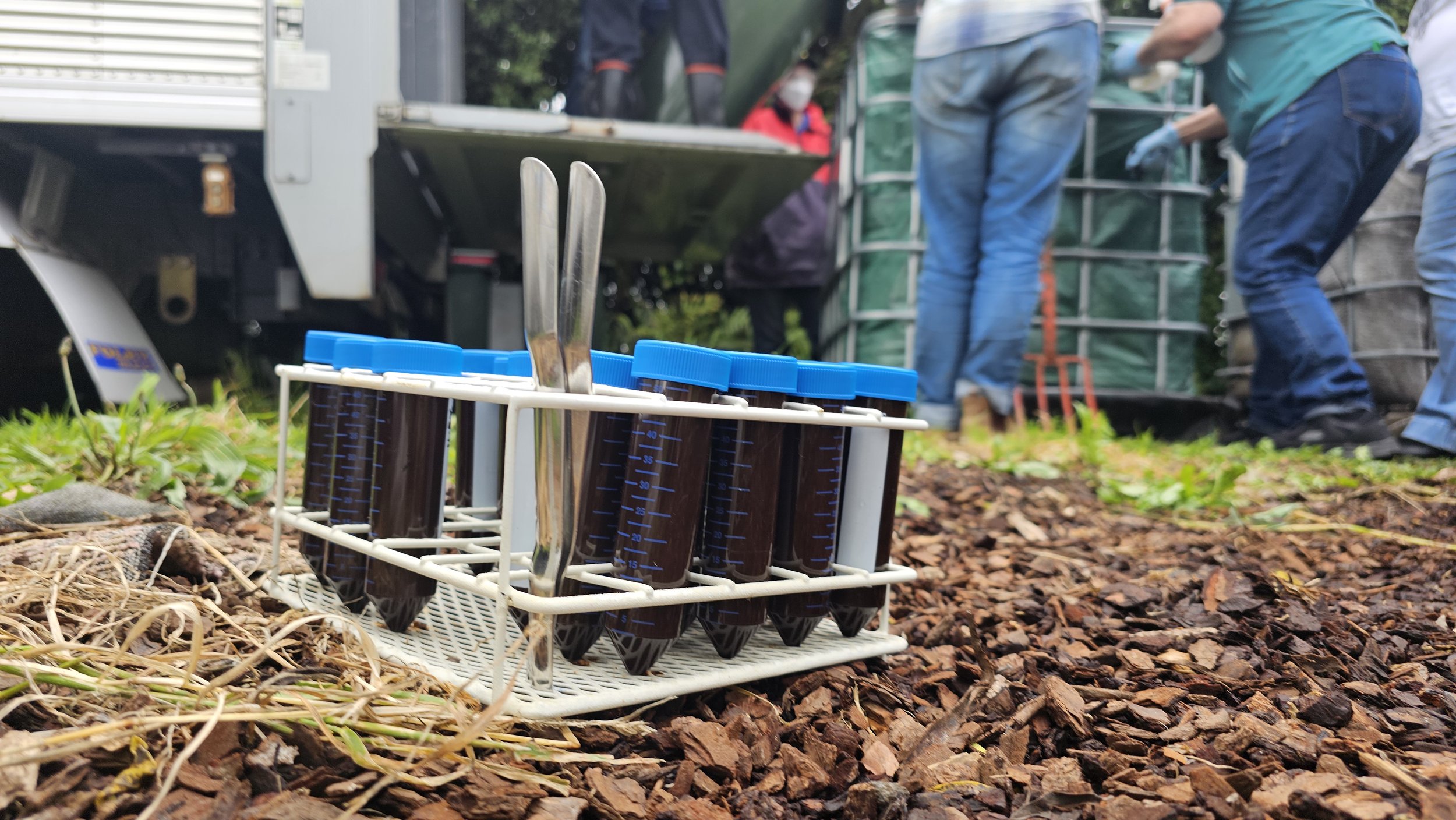
Some compost samples taken on-site by the Massey University team for the Pivot project.
Compost Trials and Scientific Progress
The science side of the project is now actively underway.
With support from the Massey University team through the Pivot project, compost samples are now being analysed. After months of building and collecting, we're into the validation phase, looking at what's actually happening biologically within these systems.
Compost batches have been carefully monitored across different stages over the past five months. The early batches are now approaching a key milestone: being assessed for readiness for growth trials.
We've also been developing a simple tracking system to follow each batch from food waste collection through to compost maturity, covering bins, fermentation stages, and progress through the different systems. It's an early step toward connecting what's happening on the ground with a clearer picture of how each batch performs over time.
The questions we're trying to answer are fairly straightforward:
Is the compost safe?
Is it biologically functional?
Does it actually support plant growth?
Four Systems, One Goal
The trials compare multiple composting systems side by side:
IBC Johnson-Su style bioreactors
Circular bioreactors
Composting cylinders
Pallet compost bays
Each has different strengths depending on scale, materials, and the season. The goal isn't to find one winner. It's to understand what works in different situations, and why, including how practical each system is to run over time.
Soil biology is also being observed using microscopy and advanced sequencing to understand the microbial life doing the work underneath.
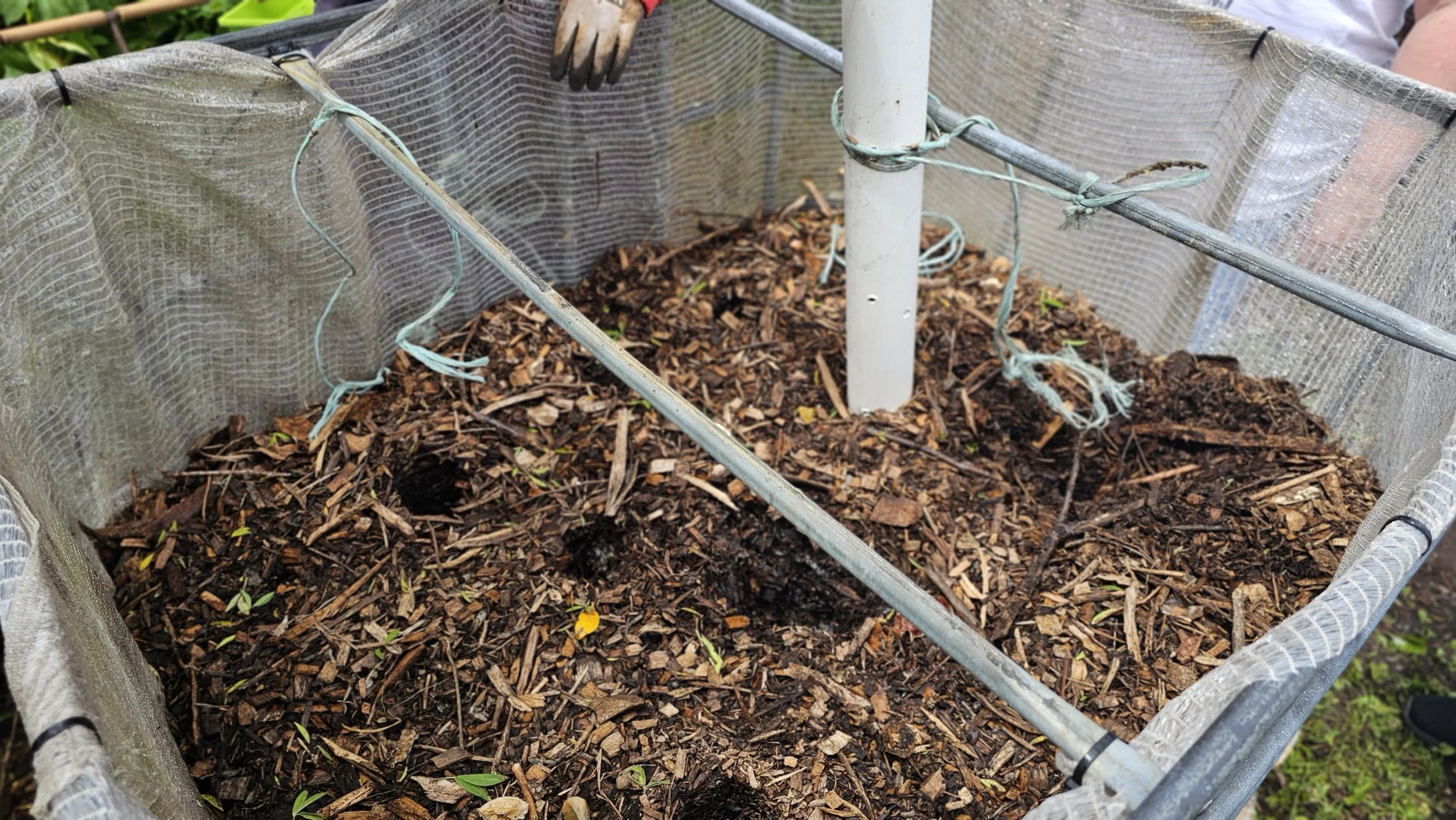
One of our IBC Johnson-Su style bioreactors, one of our composting systems.
What's Emerging
After months of steady work, a few things are becoming clear:
Compost systems are established and visible on site
Early batches are moving into maturity and assessment
Scientific analysis is underway, connecting process to biological outcomes
The site is starting to function as a place for learning and demonstration
People are beginning to connect with it as something practical and local, which feels like a shift worth noting.
“The workbee was an exciting next step in our journey; soil health is not just for farmers or scientists—it’s a shared foundation for responsible waste management, resilient food systems and thriving communities. Opening this workspace to students, businesses, and the public is an important next step, in which learning becomes collective, and solutions grow through collaboration.” Mieke Verschoor, Co-founder & Operations Manager.
What Comes Next
The next phase is growth trials: testing how different compost types perform across different plants and systems, and working toward practical guidance on which compost suits which situation, how season affects outcomes, and how these systems might be replicated at other scales.
More working bees are planned. There's good interest from volunteers to keep showing up as the project develops.
“What I’ve loved most is that this hasn’t been happening out of sight. Volunteers have been right there with us: building the compost systems, filling them, and helping turn people’s food waste into compost teeming with life. The different systems have been great to experiment with, and now we’ve got batches maturing and getting ready for grow trials, which feels like real progress. We’re looking forward to sharing the pilot site with more of the community as we celebrate International Compost Week in May.” Caroline Gottfert, scientist and local farmer.
A Quiet Thank You
To those who came out, worked through the rain, built, laughed, and gave their time: thank you so much.
This project is being built by many hands, and that is part of what gives it strength.